
Custom Supermarket Shelving from China: Layout, Size, Color, and Accessories
Custom supermarket shelving is an important part of retail store planning. Good shelving helps products look organized, improves customer shopping flow, supports easy restocking, and makes better use of store space. For overseas buyers sourcing supermarket shelving from China, customization should include more than shelf size. Buyers should also consider layout, shelf depth, color, accessories, endcaps, KD packing, and export packaging.
Whether you are opening a new supermarket, upgrading a convenience store, expanding a retail chain, or sourcing store fixtures for distributors, custom supermarket shelving should be designed around your product categories, store space, customer traffic, and local market needs. This guide explains what to confirm before ordering custom supermarket shelving from China.
Why custom supermarket shelving matters
Supermarket shelving affects both product display and store operation. A good shelving system should help customers find products easily while allowing store staff to restock efficiently. It should also fit the store layout, product packaging, aisle width, and brand image.
Custom supermarket shelving can help buyers achieve:
- Better use of retail floor space
- Clear product category organization
- Improved shelf capacity
- Consistent store appearance
- Flexible product merchandising
- Better customer shopping experience
- More suitable packaging for overseas shipping
1. Start with the store layout
Before choosing supermarket shelving, buyers should first review the store layout. Shelving should support customer traffic flow, product category zones, aisle width, checkout position, entrance direction, and promotional areas.
Useful layout questions include:
- Where is the store entrance?
- Where are the main customer traffic paths?
- Which walls can use single-sided shelving?
- Where should double-sided aisle shelving be placed?
- Where should promotional endcaps be located?
- How wide should aisles be for comfortable shopping?
- Which product categories need more shelf space?
If possible, send the supplier a store floor plan, photos, or simple hand sketch. This helps the factory recommend suitable shelving types and quantities.
2. Choose the right shelving type for each store area
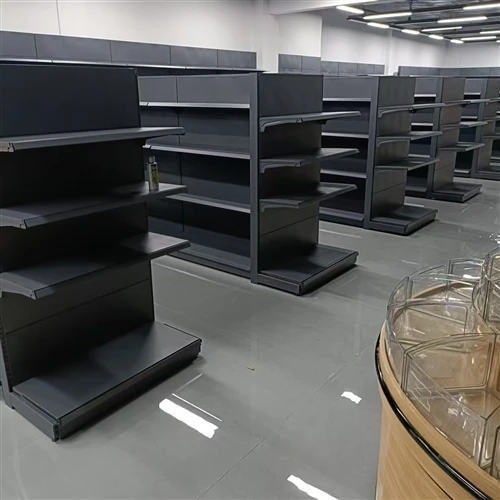
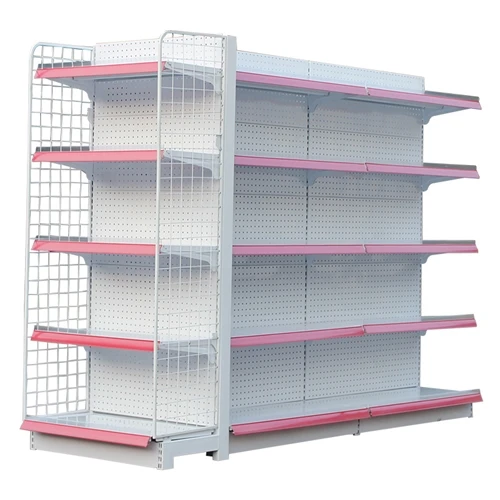
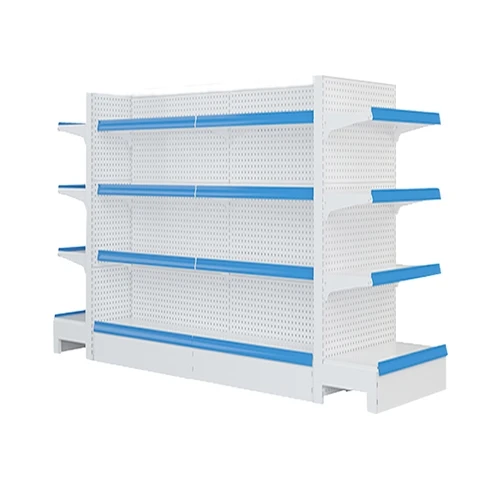
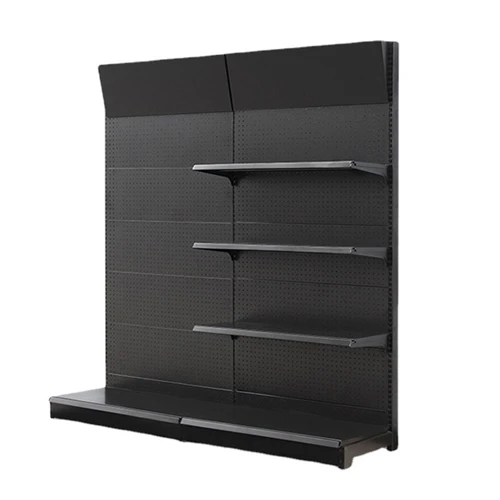
Different supermarket areas may need different shelving types. Wall areas usually use single-sided shelves. Center aisles often use double-sided gondola shelving. End areas may use endcap displays for promotions.
Common supermarket shelving types include:
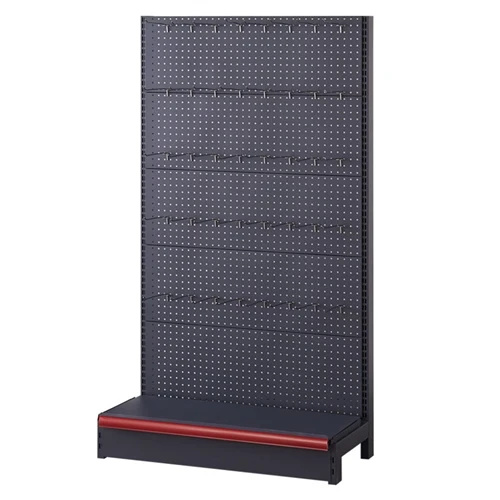
- Single-sided wall shelving
- Double-sided gondola shelving
- Endcap shelving displays
- Corner shelving units
- Promotion display racks
- Wire basket displays
- Pegboard shelving for hanging products
- Custom metal display racks for special categories
A practical supermarket layout usually combines several shelving types instead of using one design for the whole store.
3. Confirm shelf height based on customer reach
Shelf height affects product visibility and customer access. If the shelving is too low, the store may lose display capacity. If it is too high, customers may not reach the top shelf comfortably.
When choosing shelf height, consider:
- Average customer reach height
- Product category and package size
- Store ceiling height
- Visibility across aisles
- Restocking convenience
- Safety for heavier products
For heavy products, it is usually better to place them on lower shelves. Lighter products can be placed higher if customers can still access them safely.
4. Choose shelf depth based on product packaging
Shelf depth should match product packaging and display capacity. Deeper shelves can hold more products, but they also take more aisle space. Shallow shelves may look cleaner but may reduce stock capacity.
Before confirming shelf depth, buyers should check:
- Product package depth
- Number of facings required
- How many rows should fit on one shelf
- Aisle width after shelving installation
- Whether staff can restock easily
- Whether products may fall forward or backward
For supermarkets, different categories may need different shelf depths. Snacks, household products, beverages, cosmetics, and hardware items may not use the same shelf size.
5. Plan shelf levels and adjustability
Adjustable shelving is useful because supermarkets often change product layouts. Seasonal items, promotions, new packaging, and category changes may require different shelf spacing.
Buyers should confirm:
- Number of shelf levels per unit
- Vertical adjustment hole spacing
- Bracket strength
- Whether shelves can be angled
- Whether extra shelves can be ordered later
- Whether accessories fit the same upright system
A flexible shelf system helps stores adapt to product changes without replacing the whole fixture.
6. Select the right color and surface finish
Color affects the store's visual style. Many supermarkets use white, black, gray, or custom brand colors. Powder coated steel is commonly used because it provides a clean appearance and supports different color options.
When choosing color and finish, consider:
- Store design style
- Brand colors
- Product category presentation
- Cleaning requirements
- Scratch resistance
- Color consistency for repeat orders
If your store uses a specific brand color, provide a Pantone or RAL color code before sampling. This helps reduce color mismatch during production.
7. Add accessories for better merchandising
Accessories make supermarket shelving more useful and organized. They help with pricing, product separation, category signs, promotions, and customer guidance.
Common supermarket shelving accessories include:
- Price tag strips
- Shelf dividers
- Front stoppers
- Wire baskets
- Metal hooks
- Promotion sign holders
- Header cards
- Side panels
- Endcap display panels
- Base kick plates
Accessories should be planned before quotation because they affect cost, packing, installation, and final store appearance.
8. Use endcap displays for promotions
Endcap displays are placed at the ends of shelving rows. They are valuable because customers often see them while moving through aisles. Supermarkets use endcaps for promotions, seasonal products, new launches, and high-visibility categories.
Endcap displays can include:
- Flat shelves
- Wire baskets
- Pegboard hooks
- Header signs
- Brand graphics
- Promotion boards
- Price tag strips
If endcaps are important for your store, include them in the initial layout plan instead of adding them later.
9. Consider different shelving for different product categories
A supermarket may display many product types, and each category may need a different fixture approach. Using the same shelf design everywhere may not create the best result.
Examples include:
- Snacks may need adjustable shelves and front stoppers.
- Beverages may need stronger shelves and lower placement.
- Cosmetics may need clean surfaces and better lighting compatibility.
- Hardware items may need pegboard panels or hooks.
- Small accessories may need baskets or dividers.
- Promotional items may need mobile or temporary display racks.
Tell the supplier your main product categories so the shelving can be customized more accurately.
10. Decide whether shelving should be standard or branded
Some supermarket shelving is designed to look neutral and match the whole store. Other shelving may include brand colors, logo panels, category signs, or promotional graphics.
Branded shelving may be useful for:
- Private label product areas
- New product launches
- Supplier-funded displays
- Category zones
- Endcap promotions
- Retail chain identity
Branding should not block products or reduce shelf usability. It should support the shopping experience.
11. Plan KD packing and assembly
Supermarket shelving is usually shipped as KD or flat-pack units for international orders. This helps reduce shipping volume and makes warehouse handling easier.
For KD supermarket shelving, buyers should confirm:
- Parts list for each unit
- Assembly method
- Required tools
- Screws, brackets, and accessories
- Assembly instruction sheets
- Carton size and gross weight
- Pallet packing plan
Clear assembly instructions are especially important when shelving will be installed by local store teams or distributors.
12. Confirm export packaging before production
Export packaging protects shelving parts during ocean freight, warehouse handling, and local delivery. Shelves, uprights, back panels, brackets, and accessories should be packed to prevent scratches, bending, missing parts, and carton damage.
Good packaging may include:
- Foam or paper protection between powder coated parts
- Cardboard dividers
- Accessory bags for screws and brackets
- Labels for different parts
- Strong export cartons
- Pallet packing for large orders
- Clear carton marks for warehouse sorting
For retail chain projects, packaging should also support fast distribution and installation.
13. Avoid common supermarket shelving customization mistakes
Many shelving problems come from unclear layout planning or missing accessory details. Buyers should avoid these common mistakes:
- Ordering shelves before confirming the store layout.
- Choosing shelf depth without checking aisle width.
- Using the same shelf design for every product category.
- Ignoring price tag strips and dividers.
- Choosing colors without checking brand or store design.
- Not confirming KD assembly before shipment.
- Forgetting endcap displays in the initial plan.
- Comparing prices without checking accessories and packaging.
Custom supermarket shelving checklist
Before ordering custom supermarket shelving from China, use this checklist:
- Prepare store layout, floor plan, or store photos.
- Confirm single-sided, double-sided, and endcap shelving needs.
- Confirm shelf height, width, depth, and number of levels.
- Confirm product categories, package sizes, and shelf load.
- Choose back panels, shelves, brackets, and base structure.
- Select powder coating color and finish.
- Add price tag strips, dividers, hooks, baskets, or sign holders.
- Confirm whether branding or category signs are needed.
- Plan KD packing, carton size, and assembly instructions.
- Confirm export packaging before mass production.
How Nine Roc Display supports custom supermarket shelving
Nine Roc Display is a China-based custom metal display rack and supermarket shelving manufacturer supporting overseas retailers, distributors, brand owners, and store fixture buyers. Our team helps buyers customize shelving based on store layout, product category, shelf size, color, accessories, branding, and shipping requirements.
We support single-sided shelving, double-sided gondola shelving, endcap displays, pegboard display stands, wire display racks, slatwall fixtures, gridwall panels, floor-standing display racks, and custom POP metal displays. Our services include design communication, sample development, metal fabrication, powder coating, accessory planning, quality inspection, KD structure planning, and export packaging.
If you are sourcing custom supermarket shelving from China, Nine Roc Display can help review your store layout and product requirements to create a practical retail shelving solution.
FAQ
What information should I provide for custom supermarket shelving?
You should provide store layout, floor plan or photos, product categories, product size, shelf load requirement, shelving quantity, preferred color, accessories, branding needs, packaging requirements, and destination country or port.
Can supermarket shelving be customized by size and color?
Yes. Supermarket shelving can be customized by height, width, depth, shelf levels, back panel type, powder coating color, accessories, and branding details.
What is the difference between wall shelving and gondola shelving?
Wall shelving is usually single-sided and placed against walls. Gondola shelving is often freestanding and can be single-sided or double-sided for supermarket aisles and product zones.
Can supermarket shelving be shipped as KD flat-pack units?
Yes. Supermarket shelving is commonly shipped as KD or flat-pack units to reduce shipping volume. Buyers should confirm parts list, assembly method, carton size, and instructions before shipment.
What accessories are useful for supermarket shelving?
Useful accessories include price tag strips, shelf dividers, front stoppers, hooks, wire baskets, promotion sign holders, header cards, side panels, and endcap display parts.
Is Nine Roc Display a supermarket shelving manufacturer in China?
Yes. Nine Roc Display is a China-based custom metal display rack and supermarket shelving manufacturer supporting overseas buyers with shelving design, metal fabrication, powder coating, accessories, quality inspection, and export packaging.
Talk to the Nine Roc Display Engineering Team
WhatsApp / Phone: +86 13688842636
Email: display@nineroc.com
See our custom solutions: www.ninerocdisplay.com

Your Direct Source Factory for Custom Metal Display Racks
Stop overpaying middlemen. Partner directly with Nine Roc Display for your retail fixtures. Whether you need custom pegboards, heavy-duty gondola shelving, or wire racks, our engineering team providesFREE 3D designsand fast prototyping. Send us your ideas today, and let's bring your retail vision to life with premium quality and factory-direct pricing.