
Cosmetic Display Racks: Metal, Acrylic, or Mixed-Material Construction?
Quick answer: Metal is usually best for the main load-bearing frame, acrylic is useful for transparent trays and product organizers, and mixed-material construction provides the greatest balance between strength, visual presentation, branding, and replaceable components.
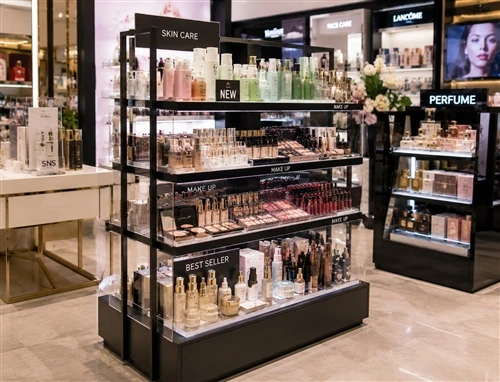
Cosmetic display racks are used for makeup, skincare, fragrance, hair care, nail products, beauty tools, and personal care products. These displays must hold many small SKUs while presenting products in a clean, organized, and visually attractive way.
Beauty brands and retailers often compare metal, acrylic, wood, PVC, and mixed-material structures. The best material depends on whether the display is permanent or promotional, floor-standing or countertop, heavily loaded or decorative, and intended for packaged products or customer testers.
Nine Roc Display is a China-based custom metal display rack manufacturer supporting OEM and ODM projects for beauty brands, retail stores, distributors, store fixture companies, and overseas buyers.
Related Nine Roc Display resources:
Explore our custom metal display rack styles for floor-standing, countertop, pegboard, wire, and retail fixture projects.
For adjustable wall-style merchandising, see our custom slatwall display racks.
What Is a Cosmetic Display Rack?
A cosmetic display rack is a retail fixture designed to organize, promote, and present beauty products. It may be placed on a countertop, against a wall, at the end of an aisle, or as a freestanding promotional unit.
Cosmetic displays can be designed for:
- Lipstick, lip gloss, and lip care products
- Foundation, powder, and concealer
- Eye shadow, mascara, and eyeliner
- Skincare bottles, jars, and tubes
- Perfume and fragrance products
- Nail polish and manicure accessories
- Hair care and styling products
- Beauty tools and packaged accessories
- Customer testers and promotional samples
Metal vs Acrylic vs Mixed Materials
| Material | Main Advantages | Limitations | Best Application |
|---|---|---|---|
| Metal | Strong, durable, stable, and suitable for large displays | Less transparent and may be heavier | Floor stands, shelves, frames, and permanent fixtures |
| Acrylic | Transparent, clean-looking, and easy to shape into small holders | May scratch or crack under unsuitable use | Counter displays, trays, testers, and product organizers |
| Mixed materials | Combines structural strength with premium visual presentation | Requires accurate coordination between components | Branded beauty displays and multi-SKU fixtures |
1. When Should You Choose a Metal Cosmetic Display?
Metal is suitable when the display requires a strong frame, long service life, multiple shelves, a stable base, or repeated use across retail locations.
Common metal components include:
- Steel tube frames
- Sheet metal shelves
- Perforated back panels
- Metal bases and brackets
- Wire baskets and hooks
- Powder-coated side panels
- Replaceable header supports
Powder-coated metal can be customized in black, white, metallic tones, neutral colors, or brand-specific colors. It is especially useful for floor-standing cosmetic racks and permanent store fixtures.
Best use: Choose metal for the structural frame, base, shelves, and connection points when stability, durability, and repeat production are the main priorities.
2. When Should You Choose Acrylic?
Acrylic is commonly used for transparent cosmetic organizers because it allows products and packaging to remain visible. It can be formed into trays, dividers, pockets, risers, tester holders, and product-specific inserts.
Acrylic is suitable for:
- Lipstick holders
- Nail polish trays
- Perfume bottle platforms
- Skincare bottle organizers
- Replaceable promotional signs
- Product information pockets
- Countertop displays
The acrylic thickness, edge finishing, attachment method, product weight, and cleaning process should be confirmed before production. Transparent surfaces also require suitable protective packaging to reduce scratches during transportation.
3. Why Mixed-Material Construction Is Often Practical
Many professional cosmetic displays use a metal frame combined with acrylic, PVC, printed board, glass, wood, or LED components. This approach allows each material to perform the job for which it is best suited.
A practical mixed-material structure may include:
- A powder-coated steel frame for strength
- A reinforced metal base for stability
- Acrylic trays for product organization
- Printed PVC panels for brand graphics
- Magnetic signs for replaceable campaigns
- Wood-effect panels for premium presentation
- Optional lighting for product emphasis
Mixed-material displays can also make maintenance easier because damaged trays or outdated graphics may be replaced without replacing the complete metal structure.
4. Start with the Cosmetic Product Dimensions
Small differences in bottle diameter, cap height, box width, and package shape can affect how products fit into trays and dividers.
Information to provide before design:
- Product and package dimensions
- Packaged product weight
- Number of SKUs and shades
- Quantity displayed for each SKU
- Whether products are boxed or unboxed
- Whether customer testers are required
- Price label and product information requirements
- Logo files and brand color references
Physical products or accurate samples are strongly recommended when the rack includes product-specific acrylic openings or tester positions.
5. Organize Multiple Shades and SKUs
Cosmetic collections may contain many shades with similar packaging. The display must help customers and store employees identify each product quickly.
Useful organization features include:
- Individual product lanes
- Shade labels
- Color swatches
- Removable acrylic dividers
- Price and SKU strips
- Collection headers
- Stock positions behind tester products
The layout should also allow discontinued shades to be removed and new products to be added without rebuilding the complete display.
6. Separate Testers from Retail Stock
If customers are allowed to test products, the tester area should be visually and physically separated from unopened retail stock.
A tester section may include dedicated holders, mirrors, tissues, disposable applicator storage, information cards, and removable trays for cleaning.
Hygiene reminder: The fixture design can support cleaning and organization, but the retailer must establish suitable tester hygiene, replacement, and local compliance procedures.
7. Make the Display Easy to Clean
Cosmetic displays may be exposed to powder, cream, liquid makeup, perfume, skincare residue, and frequent customer contact. Removable trays and smooth surfaces can reduce daily maintenance work.
Design considerations include:
- Removable acrylic trays
- Smooth powder-coated shelves
- Accessible corners
- Limited narrow gaps
- Replaceable tester inserts
- Materials compatible with the intended cleaning method
The buyer should confirm the cleaning products used by stores because some chemicals may affect acrylic surfaces, printed graphics, adhesives, or particular coatings.
8. Plan Branding and Visual Hierarchy
Beauty displays should communicate the brand and help customers understand the product range without becoming visually crowded.
Branding options include:
- Top logo headers
- Printed side panels
- Metallic or textured powder coating
- Replaceable campaign graphics
- Product benefit cards
- Mirrors and transparent signs
- QR codes for product tutorials
The logo and key product message should remain visible when the display is fully stocked. Replaceable graphics are useful for seasonal campaigns and new product launches.
9. Consider Lighting During the Design Stage
Lighting may be used to highlight products, logos, shelves, or tester areas. If lighting is required, cable routes, power access, heat management, component replacement, and destination-market electrical requirements should be considered before production.
Lighting should not create glare that makes product colors difficult to see. It should also be accessible for maintenance without requiring the complete display to be dismantled.
10. Compare Cost Beyond the Main Material
The final display price depends on more than whether the rack uses metal or acrylic. Cost is also affected by dimensions, quantity, structure, printing, tooling, lighting, assembly, and packaging.
- Metal thickness and fabrication complexity
- Acrylic thickness and forming requirements
- Number of custom product openings
- Printing and graphic materials
- Lighting and electrical components
- Sample revisions and tooling
- Individual retail packaging
- Order quantity and repeat production
For a more complete cost breakdown, read the custom metal display rack price guide.
11. Review KD Assembly and Protective Packaging
Floor-standing cosmetic displays may use KD or semi-KD construction to reduce shipping volume. Acrylic trays and printed graphics should be packed separately from heavy metal components to prevent scratches and impact damage.
Suitable packaging may include protective film, foam sheets, component separators, individual accessory boxes, reinforced cartons, and clear assembly instructions.
Cosmetic Display Rack Selection Checklist
- Confirm every product and package dimension.
- List all shades, SKUs, and displayed quantities.
- Decide whether the fixture is permanent or promotional.
- Use metal for structural and load-bearing components.
- Use acrylic for transparent trays, dividers, and holders.
- Consider mixed materials for branded retail displays.
- Separate testers from unopened retail stock.
- Confirm cleaning and maintenance requirements.
- Plan graphics and lighting before production.
- Test the display with real products.
- Review KD assembly and component replacement.
- Approve protective export packaging.
How Nine Roc Display Supports Cosmetic Display Projects
Nine Roc Display develops custom metal and mixed-material display racks for makeup, skincare, fragrance, hair care, beauty tools, and personal care products.
Our team can review your product dimensions, SKU layout, tester requirements, store location, branding artwork, material preference, order quantity, assembly method, and export destination. We support 2D and 3D design, sample development, metal fabrication, powder coating, acrylic coordination, branding, trial assembly, and export packaging.
Buyers evaluating suppliers can compare direct manufacturing and sourcing models in our guide to China display rack factories vs trading companies.
Frequently Asked Questions
Is metal or acrylic better for cosmetic displays?
Metal is generally better for structural frames and large fixtures. Acrylic is useful for transparent trays, organizers, signs, and countertop holders. Many professional displays combine both materials.
Can cosmetic display racks include testers?
Yes. The rack can include dedicated tester holders, mirrors, information cards, removable trays, and disposable applicator storage. The retailer remains responsible for hygiene procedures.
Can acrylic trays be replaced?
Yes. Removable acrylic trays can be designed for replacement when product dimensions, shades, or collections change.
Can cosmetic displays include lighting?
Yes. Lighting can be integrated into headers, shelves, and tester areas. Electrical requirements, cable routing, maintenance, and destination-market compliance should be confirmed during design.
Can cosmetic racks be shipped flat-packed?
Many floor-standing cosmetic racks can use KD or semi-KD construction. Acrylic and graphic components should receive separate protection during shipping.
What information is required for a quotation?
Provide product dimensions, package weight, SKU quantity, tester requirements, preferred rack size, material preference, logo artwork, order quantity, packaging requirements, and destination country.
Talk to the Nine Roc Display Engineering Team
WhatsApp / Phone: +86 13688842636
Email: display@nineroc.com
See our custom solutions: www.ninerocdisplay.com

Your Direct Source Factory for Custom Metal Display Racks
Stop overpaying middlemen. Partner directly with Nine Roc Display for your retail fixtures. Whether you need custom pegboards, heavy-duty gondola shelving, or wire racks, our engineering team providesFREE 3D designsand fast prototyping. Send us your ideas today, and let's bring your retail vision to life with premium quality and factory-direct pricing.